Search

Search

Image
Differential diagnosis teaser image
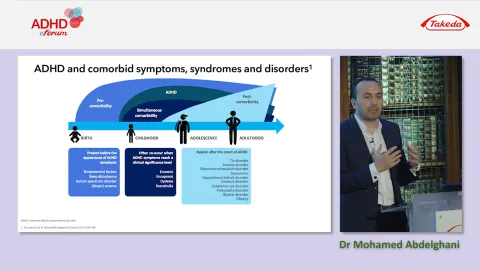
Differential diagnosis of ADHD and comorbid mental health disorders in adults

Explore the differential diagnosis of adult ADHD and the comorbidities that commonly present alongside it. Dr. Mohamed Abdelghani shares practical considerations for recognising overlapping symptoms in clinical practice.

Image
ADHD-PD module 1 teaser image
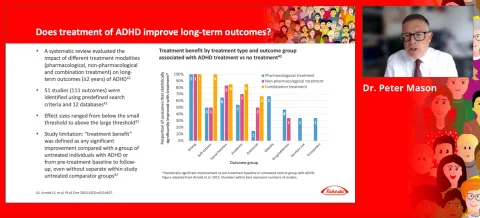
Module 1: Why ADHD matters in primary care

Why does ADHD matter in primary care? Dr. Peter Mason explains the real-world impact of under-recognised ADHD and why addressing it can improve outcomes for both the patient and the service provider.

Image
ADHD-PD Module 2 video teaser image
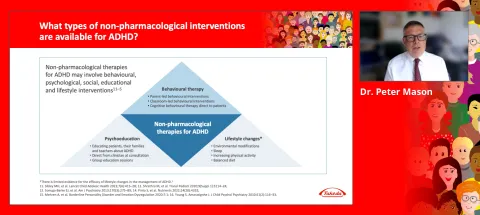
Module 2: Pharmacological management of ADHD in primary care

A practical, primary-care guide to post-diagnostic ADHD management aligned to NICE guidance. Covers medication and non-medication options for adults and children, plus common concerns and side effects. Concludes with how shared care works in practice (monitoring in primary care with specialist review).

Image
ADHD-PD module 3 teaser image
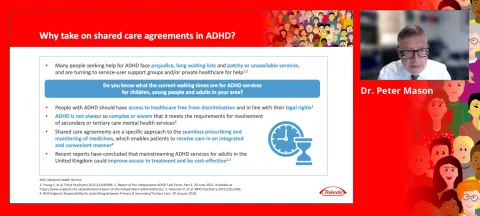
Module 3: Best practice in shared care

A concise, case-led overview of best-practice shared care for ADHD, focused on what “good” looks like in day-to-day primary care. Highlights why shared care matters, how it benefits patients and services, and how to manage common real-world problems.

Image
Meeting of Minds Series Banner
Online
Meeting of Minds- Girls, Women, Hormones & ADHD- Thriving through Life's Transitions
27/05/2026 18:00
-
27/05/2026 19:30
Online

Join us for the first webinar in our Meeting of Minds series where our esteemed faculty will  discuss how hormonal changes may influence ADHD symptoms, what signs clinicians should look for, and approaches to managing and treating ADHD during different life stages, including puberty, postpartum, and menopause. 

Image
JTDs June image
Hybrid
Joining the Dots: Advancing the management of ADHD in adults
19/06/2026 09:00
-
19/06/2026 16:00
London, Bristol & Belfast

Adult ADHD is often clinically complex, with comorbidities that can affect daily life, relationships, wellbeing, and performance at work or in education.

Join healthcare professionals for expert-led presentations, case discussions, and interactive sessions exploring the science, clinical care, and optimisation of stimulant therapy to improve outcomes for adults with ADHD.

Image
Bridging the Gap
1 of 9: Adult ADHD – Persistence, prevalence, presentation and referral

Chapter 1 of Bridging the GAP has the following learning objectives: 

  1. To understand that ADHD is a lifespan condition persisting to adulthood
  2. To acknowledge the global prevalence of adult ADHD
  3. To recognise the diagnostic criteria for and clinical presentations of adult ADHD  
  4. To improve recognition of adult ADHD, particularly in girls and women  
  5. To be aware of appropriate referral pathways for adults with ADHD 

Image
Bridging the Gap
2 of 9: Aetiology and neurobiology of ADHD

Chapter 2 of Bridging the GAP has the following learning objectives:

  1. To grasp the potential aetiological and/or neurobiological bases for the variation observed in the presentation of ADHD between individuals and across the lifespan
  2. To understand that genes and their interaction with the environment play a substantial role in causing ADHD and recognise environmental correlates with ADHD
  3. To be aware of the structural, functional and chemical neurobiological correlates of adult ADHD

Image
Bridging the Gap
3 of 9: Impact of untreated adult ADHD

Chapter 3 of Bridging the GAP has the following learning objectives: 

  1. To recognise the multi-faceted negative impact that untreated ADHD can have on adults  
  2. To be aware of the positive aspects of ADHD reported by some patients